High-Precision CNC Servo Stretch Forming Press & Equipment for Stretch Forming Aluminum Extrusions
Engineering Stretch Forming Machines for Precision Profile Bending
Achieve precise forming of complex profiles with controlled springback, minimal deformation, and consistent repeatability. Powered by PBF Smart Servo Stretch Bending Technology.
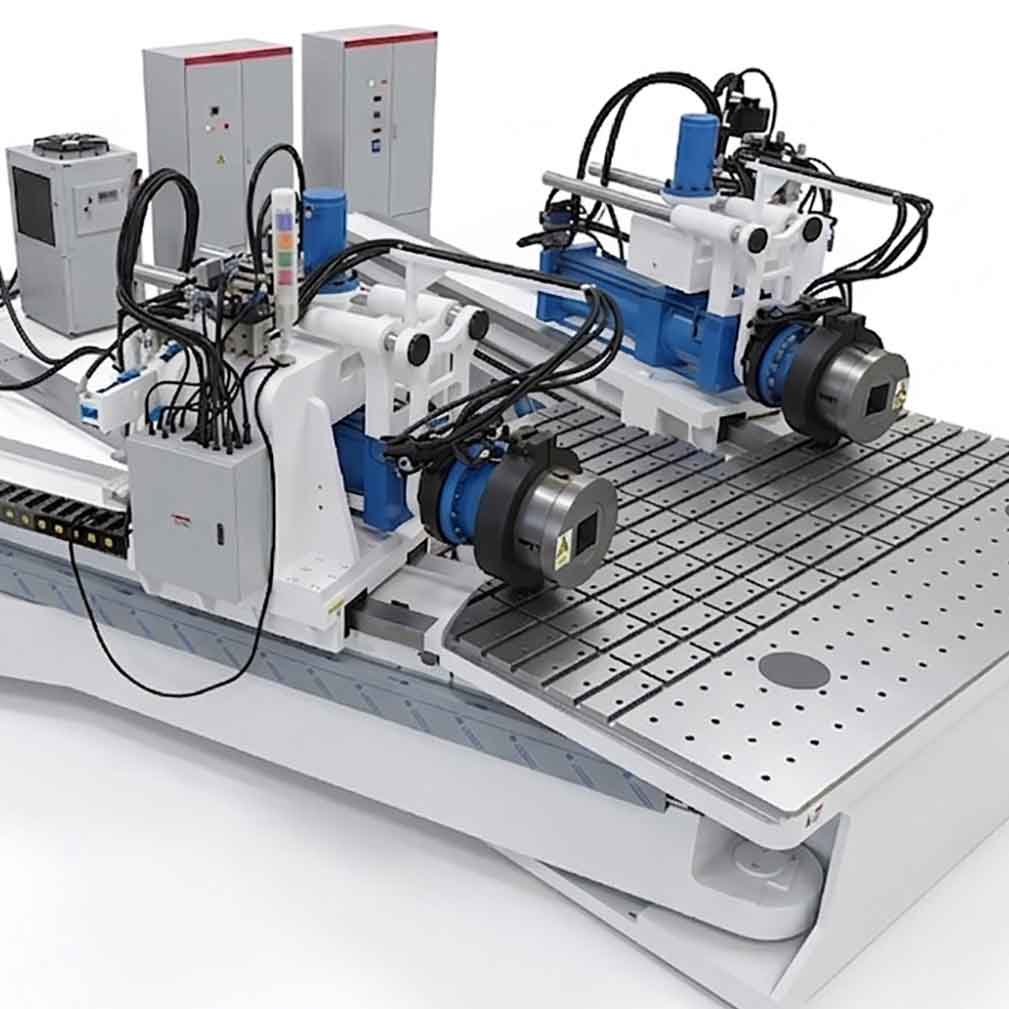
Solve Key Challenges in Stretch Forming
What Is
Stretch Forming Machine?
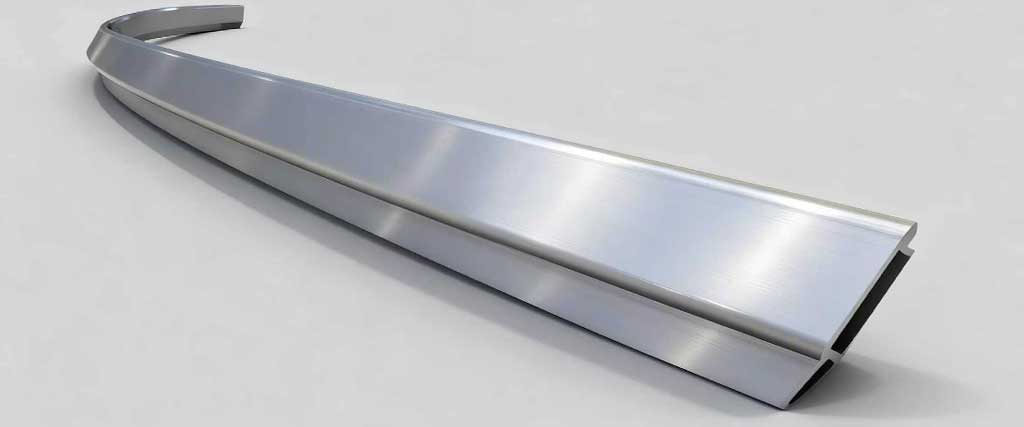
Stretch-bending shapes aluminum extrusions by first applying axial tension that reaches or slightly exceeds the material’s yield strength. This allows the extrusion to fully enter a state of plastic deformation before it is bent and pressed into the die grooves. This specialized stretch forming process ensures highly precise curves and significantly reduced springback.
bit provides the PBF Series Stretch Forming Machine models, specifically engineered for high-precision stretch bending and forming of aluminum extrusions and sheets.
Springback Control: Precise axial tension control ensures predictable material behavior and minimal springback. Deformation Control: Uniform stress distribution prevents wrinkling, collapse, and section distortion. Cracking Prevention: Optimized tension and tooling design eliminate material overstress and surface failure.
Precision Performance: High forming accuracy with minimal springback for tight-tolerance projects.
Flawless Finish: Smooth and consistent curvature with excellent surface protection during forming.
Uniform Quality: Consistent stretching over the entire profile length to prevent deformation.
Smart Control: Reliable and repeatable CNC-controlled operation for automated production.
Robust Engineering: High structural rigidity designed for heavy-duty extrusions.
Maximum Uptime: Long service life with low maintenance requirements, ensuring a high ROI.
Stretch Forming Machine is also referred to as Stretch Bending Machine, Stretch Forming Press, Extrusion Stretch Forming Machine, Stretch Forming Equipment, Profile Stretch Former, and Sheet Stretch Forming Machine.
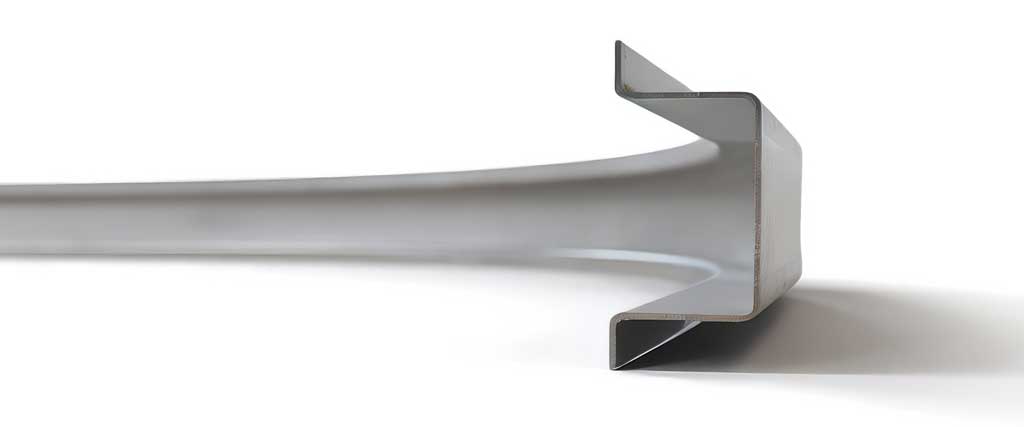
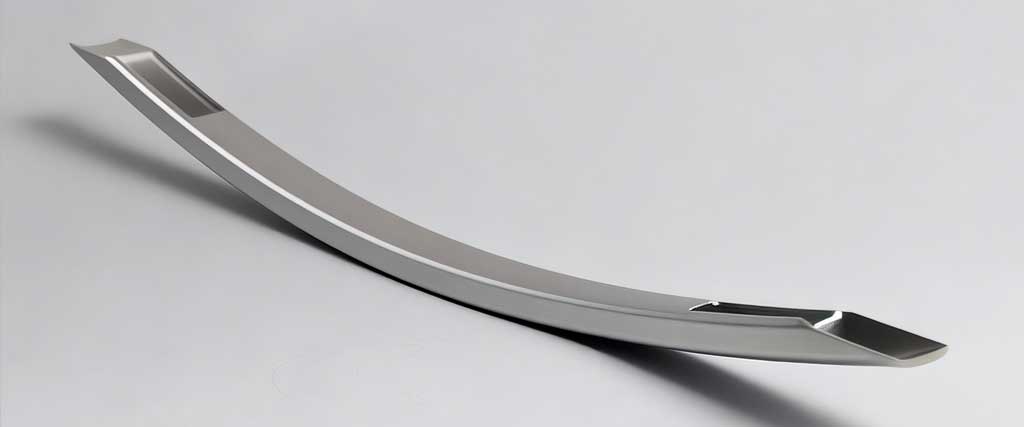
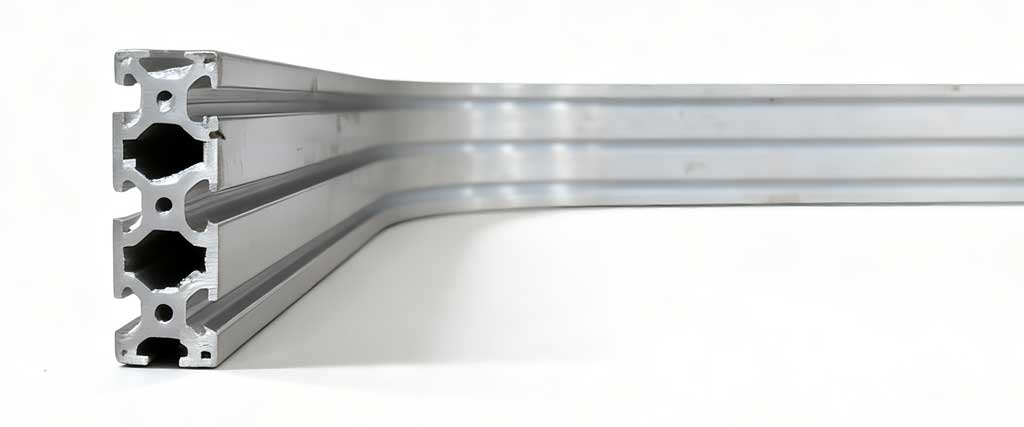

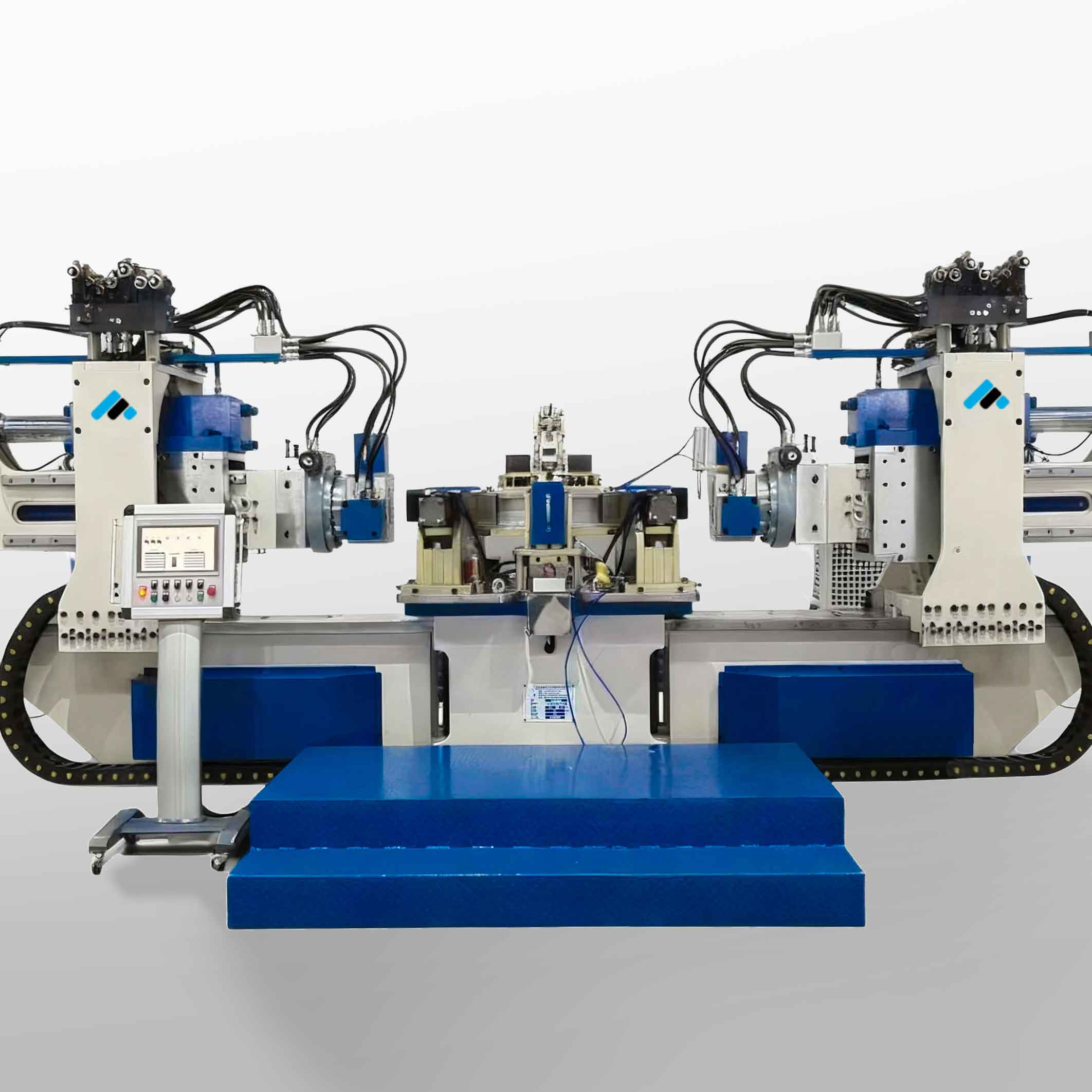
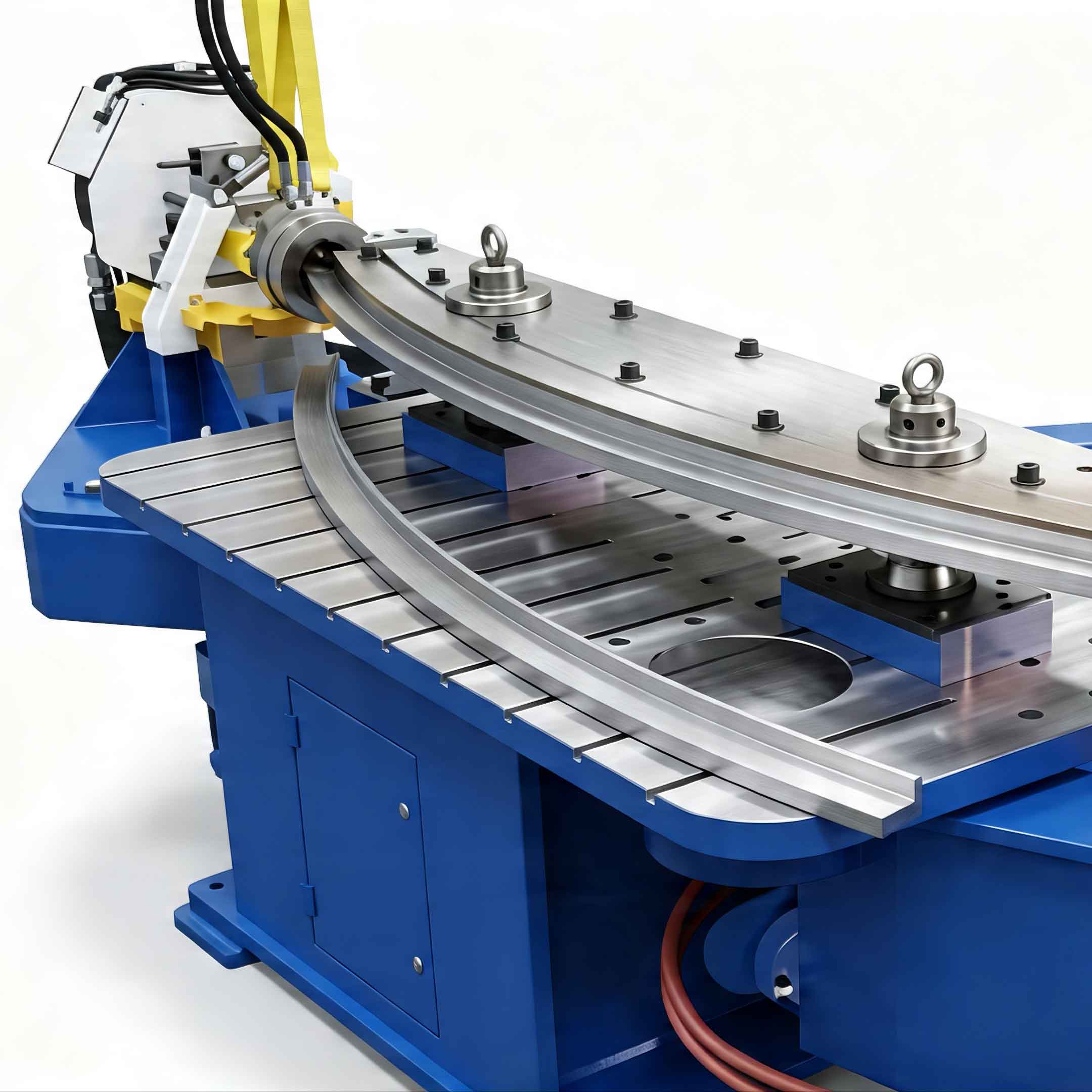
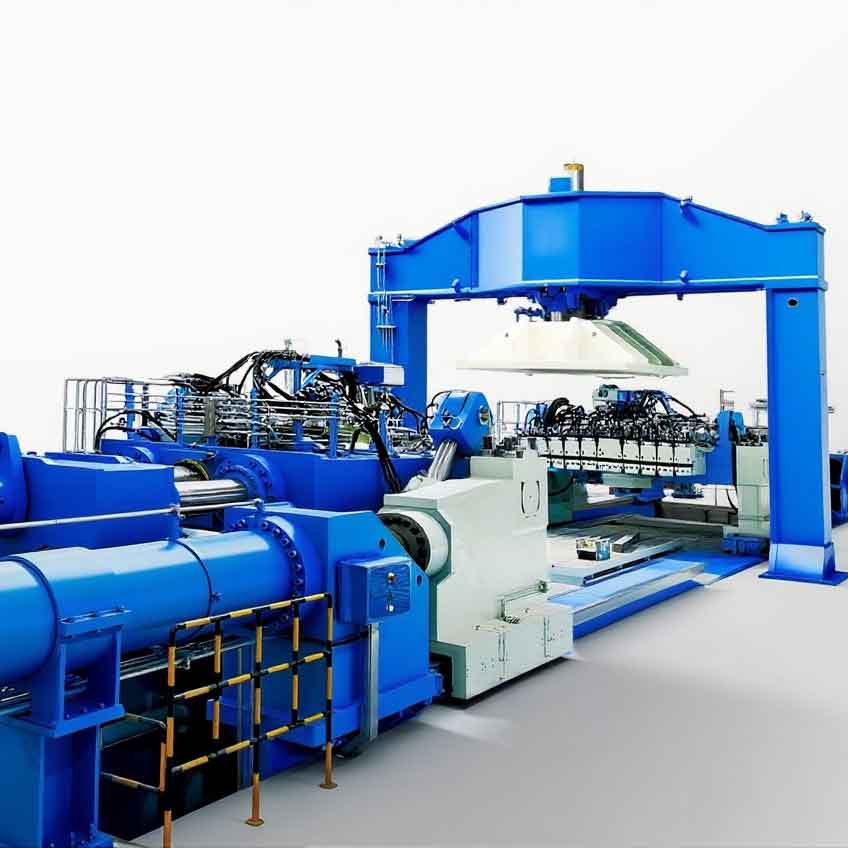
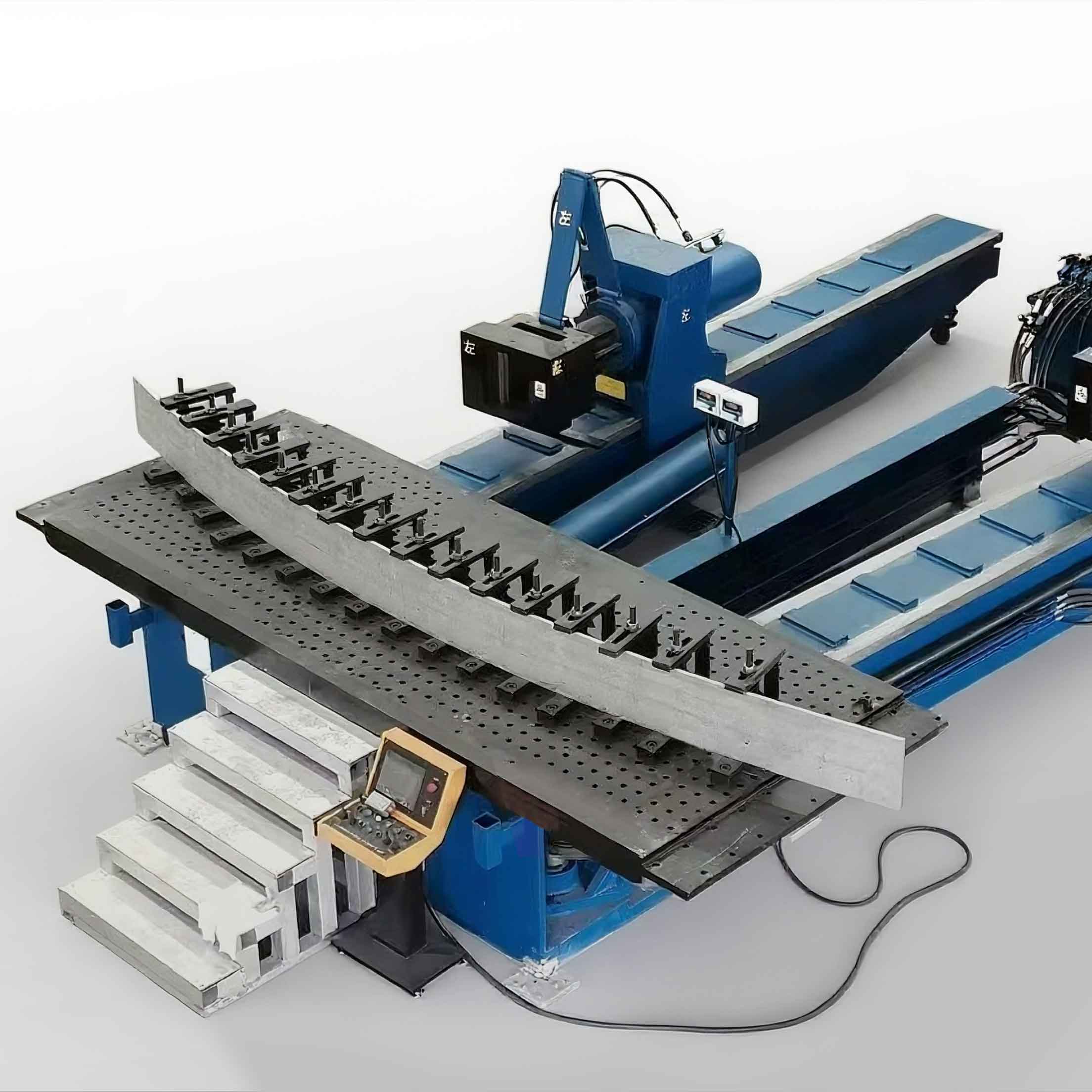
Mastering Complex Geometries with Multi-Axis Precision
Types Of
Stretch Forming Machine
Stretch forming machines are defined by their mechanical architecture and forming methodology, determining how tension and bending forces are applied to the profile. The main types include:
PBF provides high-performance CNC Stretch Forming solutions engineered for demanding applications. Featuring an advanced up to 18-axis synchronous control system with direct DXF/STEP import, our PBF series ensures seamless transitions across diverse production scales. By integrating real-time Z-axis lifting for 3D contouring, T-axis twist compensation, and integrated CAE springback simulation, the system tackles complex aerospace structural components and automotive roof rails with exceptional accuracy. Whether executing hot stretch forming for titanium alloys or processing heavy-duty profiles up to 16 meters in length, BIT delivers unmatched repeatability and a flawless finish on every complex curvature.
Rotary Table Stretch Forming Machines: The die is mounted on a central rotating table. The profile is clamped under controlled axial tension while the table rotates, forming the material around the die with high accuracy and repeatability.
Swing Arm (Twin-Arm) Stretch Forming Machines: Both compact(for automotive) and large models share a unified Swing-Arm design. Synchronized arms feature linear carriages to adjust clamp distances for varying part lengths, utilize a “Fixed Die, Moving Gripper” logic. Twin arms provide axial tension via linear carriages before rotating to wrap profiles around a central die. This ensures constant stress control for complex 3D shapes, asymmetric sections, and S-curves.
Sheet Stretch Forming Machines: Designed for forming large metal sheets using wide, segmented clamping jaws. The sheet is stretched and formed over a dedicated die, typically for aluminum or stainless steel components requiring smooth curvature and high surface quality.
Other Names: Profile Stretch Former, Aluminum Stretch Forming Machine
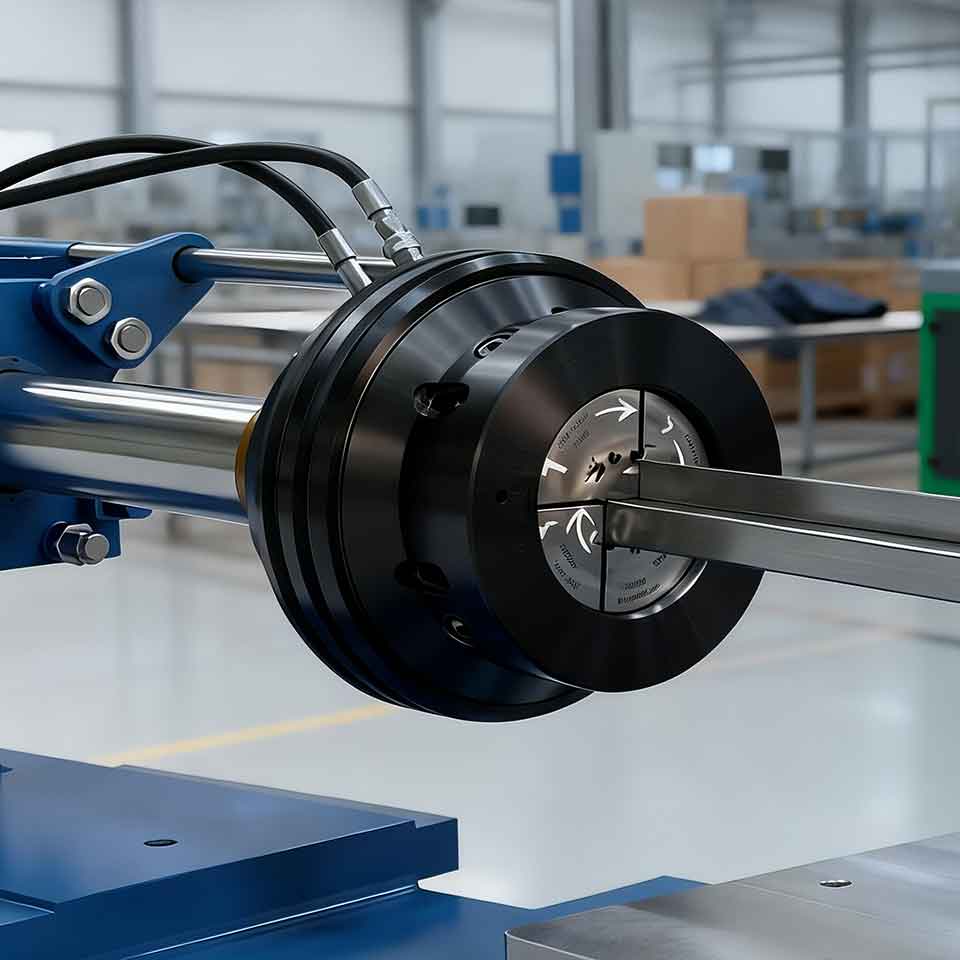
AS Profile Stretch Former
High-performance stretch bending for large/complex steel & aluminum extrusions. Best solutions for defect-free, small-radius bends on structure profiles.
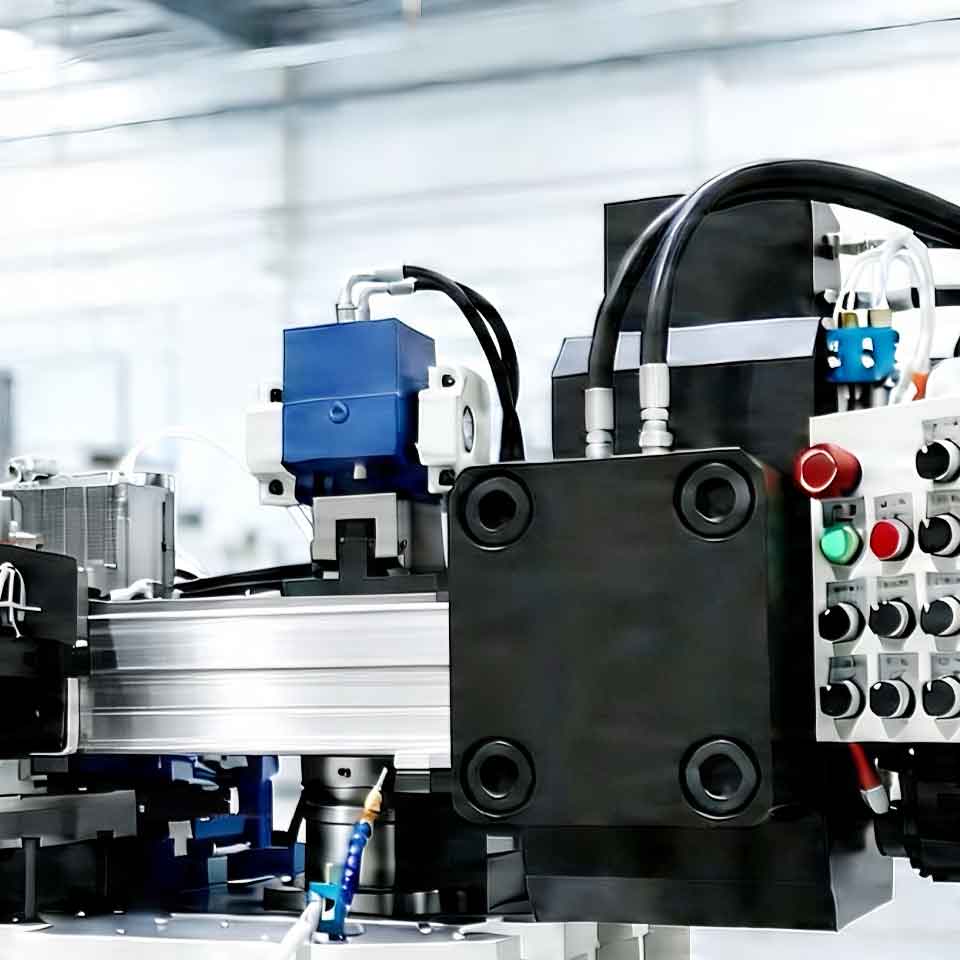
AU Stretch Bendng Machine
Precision stretch bending for auto extrusions. High-load forming for bumper beams & T-axis torsion for complex 3D roof racks. High-volume production.
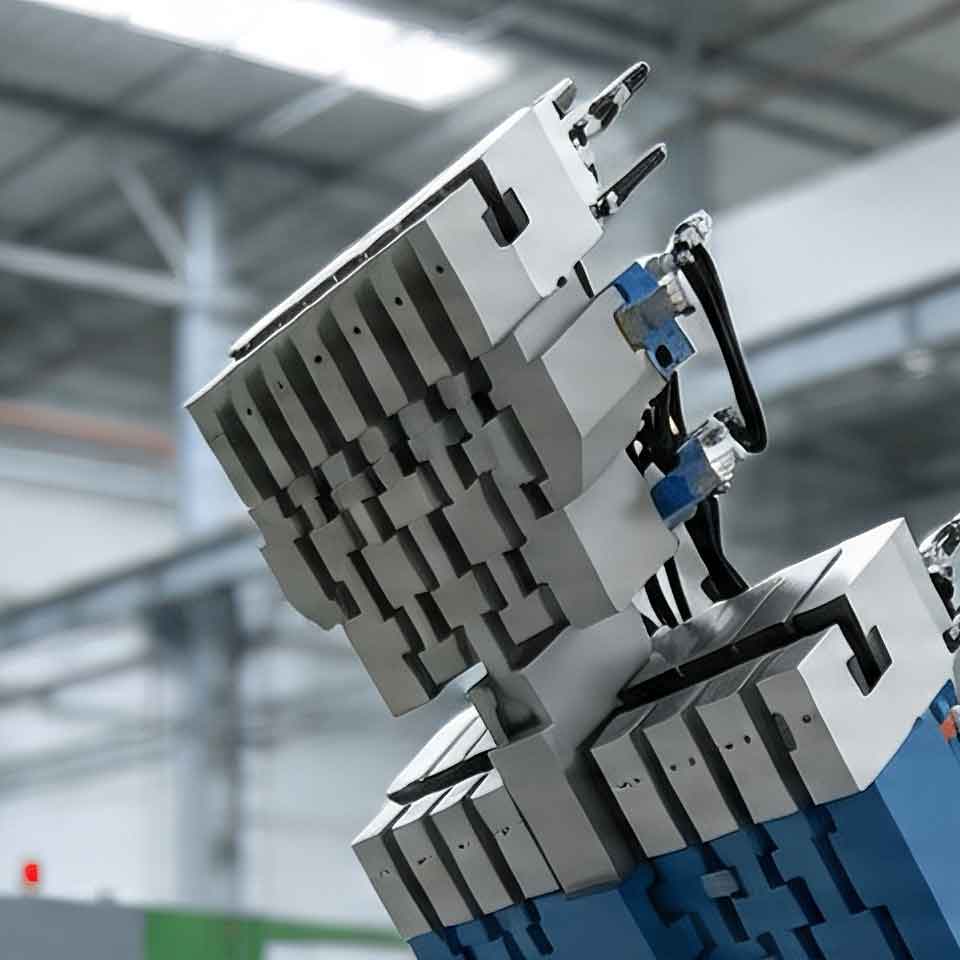
SW Sheet Stretch Forming Machine
Mastering sheet stretch forming for aerospace skins. Expert CNC solutions for large double-curvature panels & fuselage sections. Defect-free surface.
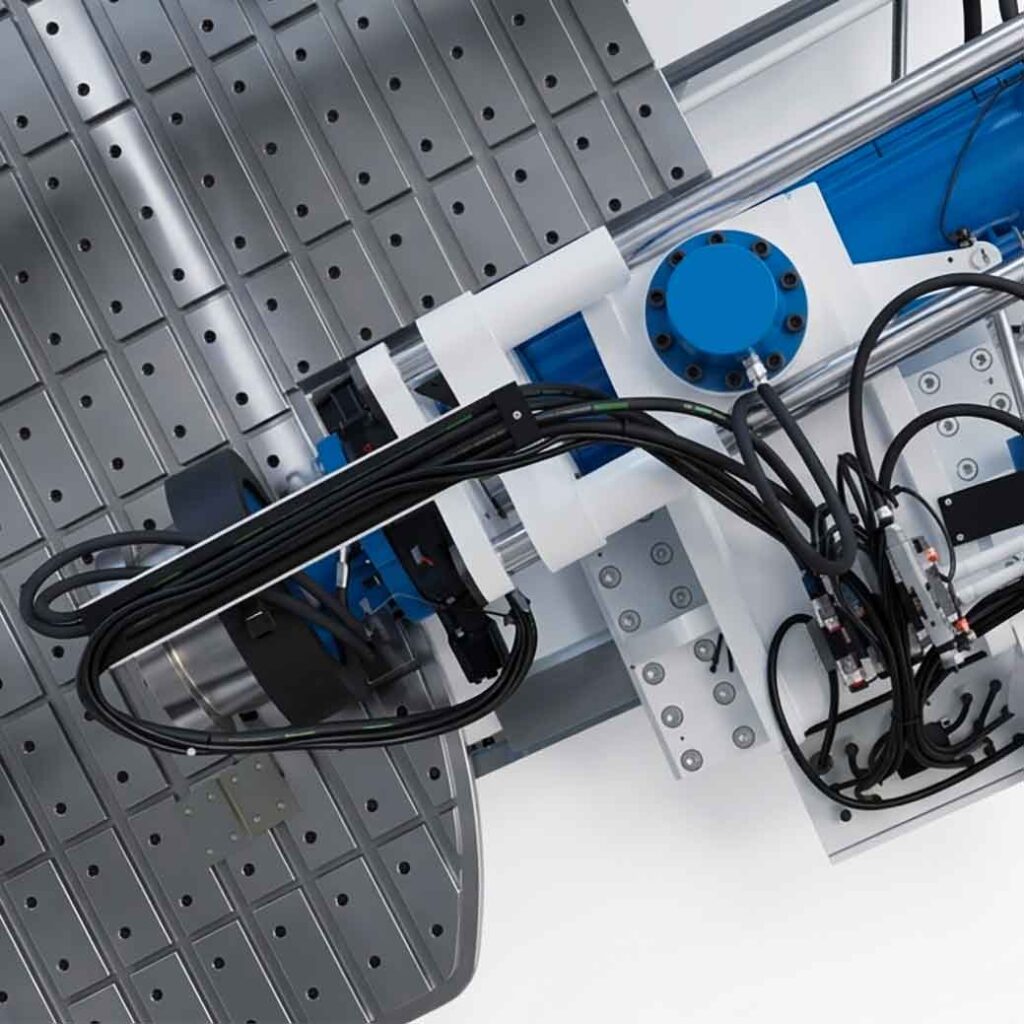
Achieving Precision Forming Through Controlled Material Behavior
Why Choose
Stretch Forming
Stretch forming technology controls material deformation by applying axial tension during the forming process, resulting in improved dimensional accuracy, reduced internal stress, and stable forming performance.
PBF Stretch Bending systems are engineered for diverse forming requirements, integrating up to 18-axis synchronized control to achieve exceptionally versatile process capabilities:
Low Springback Control – Springback Deviation: ≤ ±0.5°, Positioning Accuracy: ±0.05 mm
Medium Springback Control – Springback Deviation: ≤ ±0.2°, Positioning Accuracy: ±0.02 mm
High Precision Forming – Springback Deviation: ≤ ±0.1° (Refined by CAE Simulation), Positioning Accuracy: ±0.01 mm
Forming Capability – Large Radius Forming, Complex Cross-Sections, Multi-Hollow Profiles, 2D and 3D Profile Forming
Material Behavior Control – 20+ Years of Tooling Expertise, Reduced Internal Stress, Uniform Material Distribution, CAE Springback Simulation, Stable Geometry
Surface Quality – Smooth Curvature, Minimal Surface Marking, Direct DXF/STEP CAD Import
Enable Precision Forming Across Industries
Uses Of
Stretch Forming Machine?
Depending on the application requirements, stretch forming machines can process aluminum, stainless steel, and other metal profiles with precise curvature, controlled springback, and high repeatability.
PBF Series Stretch Forming Machines are built on an advanced multi-axis CNC synchronized control architecture, with up to 18-axis coordination. With 0.01 mm positioning precision, the system delivers precise springback control and stable forming performance.
Building & Curtain Wall Industry: Curtain wall systems, architectural façades, aluminum window and door profiles, aluminum-clad wood profiles, and large-scale curved building structures.
Architecture & Decorative Engineering: Complex curved panels, interior decoration profiles, lighting structures, exhibition designs, and custom architectural components.
Industrial Profile Forming: Heavy-duty aluminum extrusions, steel structural profiles, machine frames, guide rails, and customized industrial components requiring high precision forming.
Transportation Industry: Applications in automotive, rail transit, shipbuilding, and aerospace, including structural frames, interior/exterior profiles, and aerodynamic components.
Special Structural Components: Large radius arcs, multi-radius curves, asymmetric profiles, and complex non-standard shapes that require high-precision forming solutions.
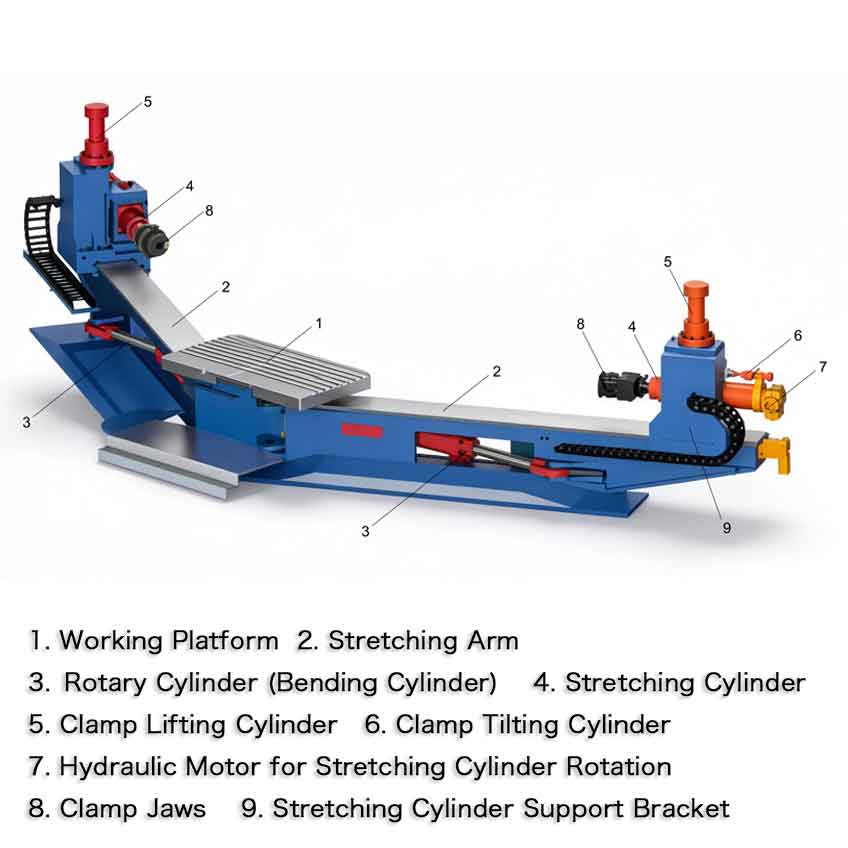
How Its Built?
Stretch forming machines require a high-rigidity mechanical structure and precision-controlled actuation system to ensure stable force transmission and accurate forming performance.
Stretch forming systems are typically constructed with a reinforced machine frame, synchronized multi-axis drive units, and precision clamping mechanisms. The structure must withstand high axial tension while maintaining alignment between the profile, clamping heads, and forming die.
PBF Stretch Forming Machines are built using advanced CNC-controlled hydraulic and servo systems, combined with high-strength structural components to ensure consistent forming accuracy and long-term stability.
We utilize precision-engineered components and established manufacturing processes to achieve the following characteristics:
High structural rigidity under heavy load
Stable and uniform force distribution
Precise multi-axis synchronization
Reliable clamping and positioning performance
Long service life with minimal mechanical deformation
Machine configuration range: Single-arm, double-arm, rotary table, and multi-axis systems
Control system: CNC control with multi-axis coordination (up to 18-axis optional)
How It Works?
Stretch forming operates by applying controlled axial tension to the profile while it is simultaneously formed over a die, allowing the material to enter a stable plastic deformation state before bending.
The profile is clamped at both ends and stretched to a defined force level, typically approaching or slightly exceeding the material’s yield strength. While maintaining this tension, the forming system—such as swing arms, rotary tables, or linear drives—guides the profile around the die to achieve the required geometry.
During the stretch forming process, multi-axis coordinated motion ensures accurate control of position, angle, and force. This reduces internal stress variations and minimizes springback after unloading.
In advanced systems, additional axes enable vertical movement, rotation, and twist compensation, allowing precise control of complex 3D geometries and asymmetric profiles.
Through this process, the material exhibits reduced elastic recovery and improved geometric stability, resulting in high-precision curved components with consistent quality.