PBF-AS Swing-Arm
Stretch Forming Machine
PBF-AS/C series Swing-Arm Stretch Forming Machines offer high-precision stretch bending for aluminum extrusions. Featuring CNC servo-hydraulic control, ±180° rotating jaws, and FEA-verified frames, they ensure minimal springback and flawless finishes for aerospace, transit, and energy projects. Engineered for 24/7 heavy-duty operation with a high ROI.
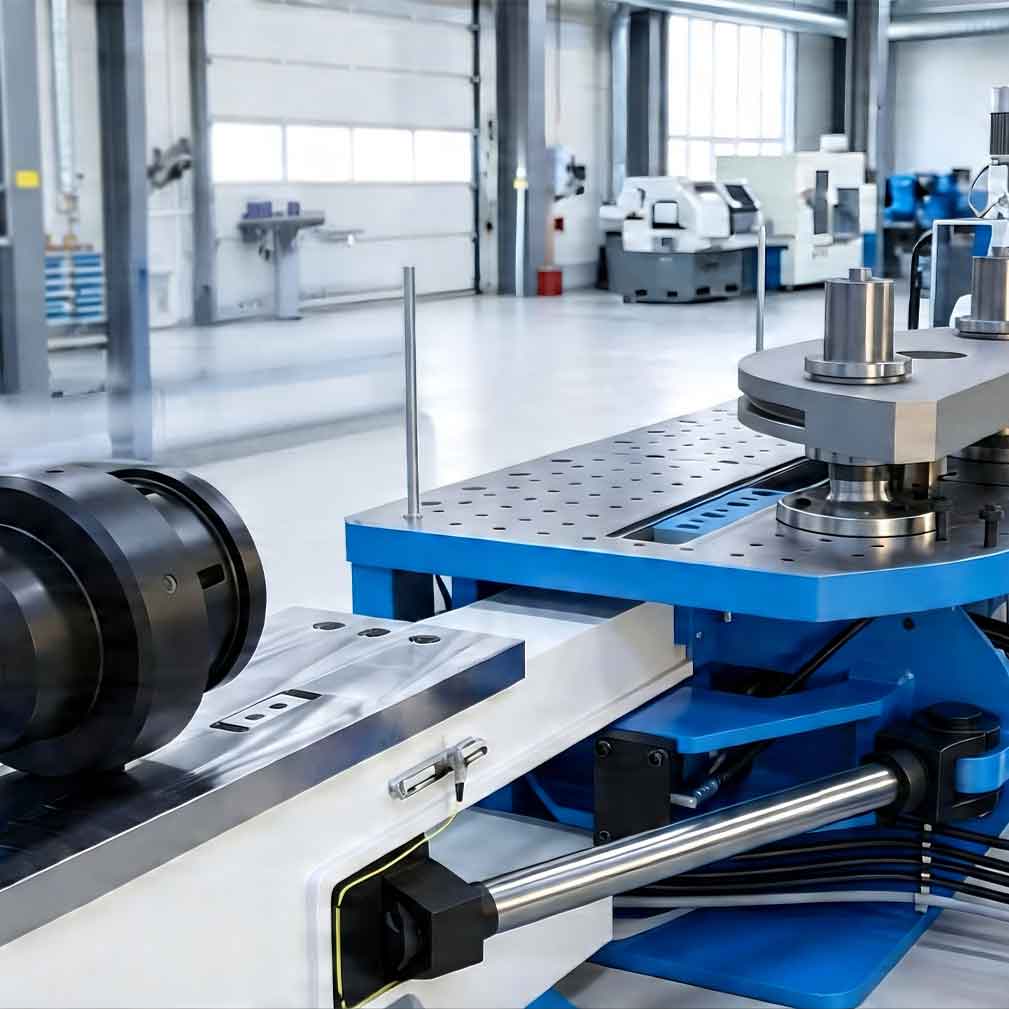
PBF-AS Swing-Arm
Stretch Forming Machine
BIT offers the PBF Series stretch forming machine, specifically engineered for high-precision stretch bending of aluminum extrusions across various industrial applications.
- Springback Control: Advanced servo-hydraulic architecture and PC-based CNC systems provide precise tension control and yield strength detection to minimize springback variations.
- Deformation Control: Intelligent force-position coordination prevents wrinkling, section distortion, and collapse in complex profiles.
- Cracking Prevention: Precision-controlled stretching and ±180° rotating jaws eliminate surface failure during the forming of aluminum and titanium alloys.
Key Performance Features
Precision Performance: High stretch bending accuracy (up to 0.008mm) for tight-tolerance aerospace, transit, and new energy projects.
Flawless Finish: Smooth curvature and excellent surface protection achieved through low-friction servo-cylinders and high-pressure filtration.
Uniform Quality: FEA-verified structures ensure consistent stretching over the entire profile length, preventing structural distortion.
Smart Control: Intelligent HMI with STEP/DXF file import and self-learning programs for fully automated, repeatable production.
Robust Engineering: High-rigidity Q345 frames and self-lubricating bearings designed for extreme heavy-duty tasks (up to 100 tons and above).
Maximum Uptime: Energy-efficient drives and robust engineering ensure 24/7 continuous operation with a high ROI.
Hydraulic System Excellence:
PBF-AS (Intelligent Servo Control): Features advanced closed-loop servo-hydraulic technology. Each cylinder is independently CNC-controlled for multi-axis synchronization and precise force distribution, enabling seamless switching between force and position modes.
PBF-C (Dual-System Stability): Utilizes a dual-independent hydraulic circuit design, completely separating clamping/bending from stretching zones. This physical isolation eliminates pressure interference, ensuring stable operation and simplified maintenance.
Types Of
Swing-Arm Stretch Forming Machine
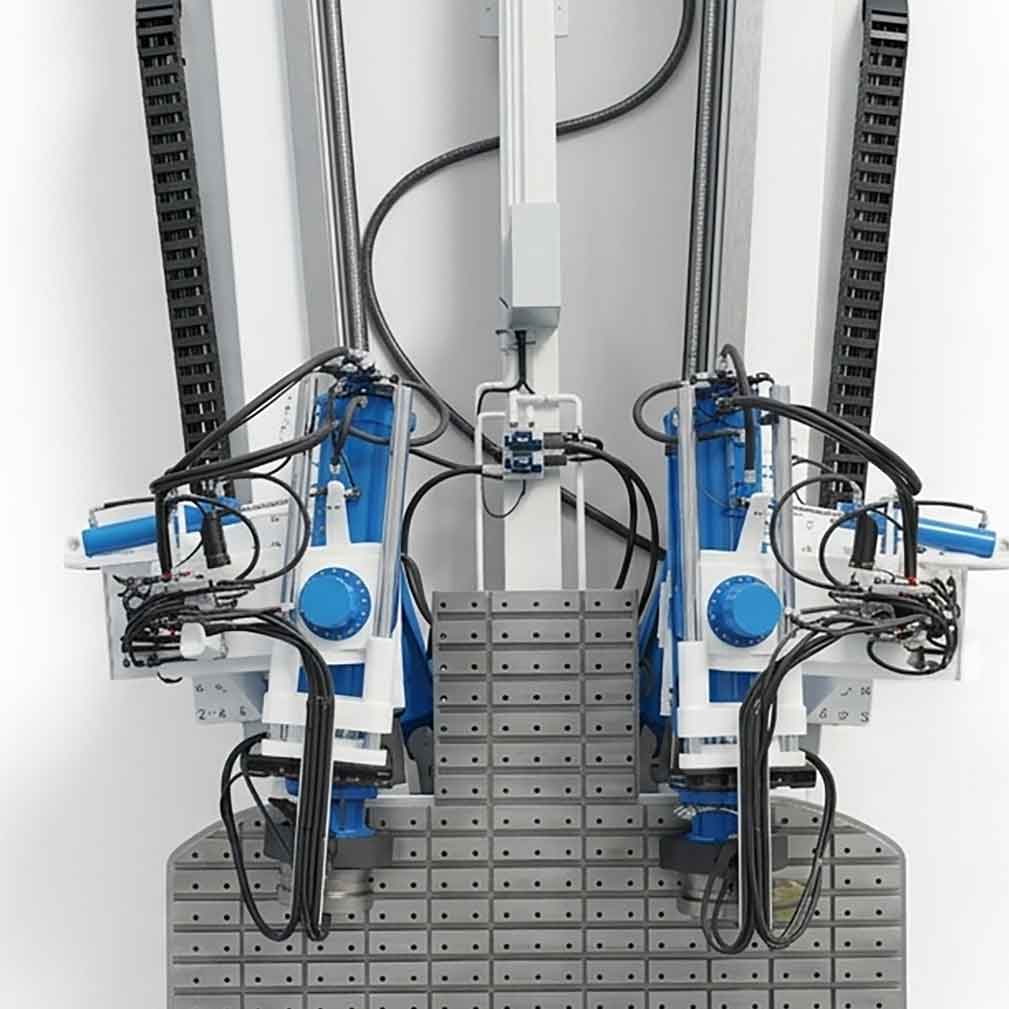
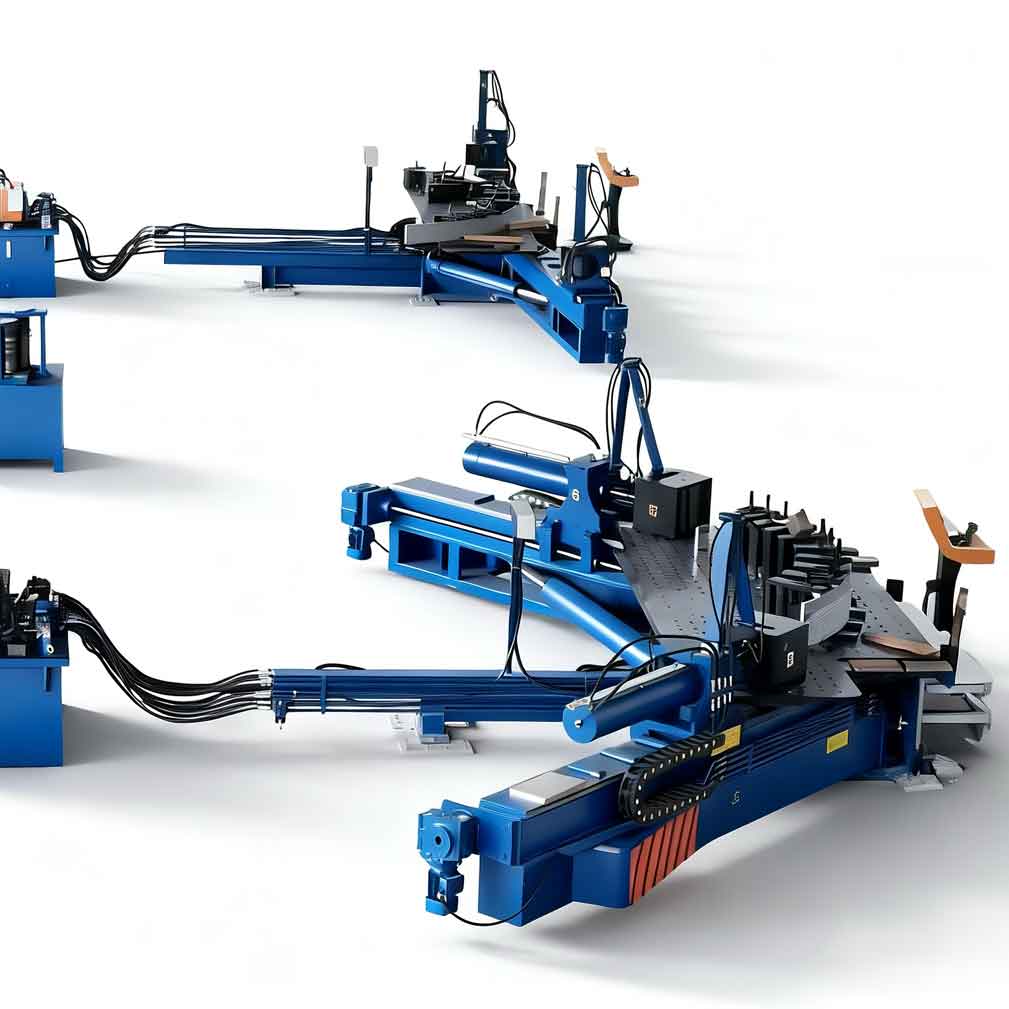
PBF-AS-C is a stretch forming machine centered on high reliability and cost-efficiency. Featuring a durable structure, it is the ideal choice for stretch bending architectural curtain wall materials and structural components.
PBF-AS is a high-precision model specifically engineered for the aerospace, transportation, and new energy industries. It features a twin-arm servo-hydraulic architecture and a PC-based intelligent CNC system.
Selection Guide for
Bending Force & Machine Tonnage
The Bending Force Calculator is an indispensable tool for technical evaluation and machine selection. Accurately calculating the required tonnage ensures that the machine provides sufficient axial tension to exceed the material’s yield point, which is critical for achieving zero-springback precision.
Why Tonnage Calculation Matters:
- Predictive Accuracy: Ensures the machine can handle the maximum cross-sectional area and highest yield strength of your specific profiles.
- Process Stability: Ensures stretch bending stability by preventing “under-stretching,” which leads to unpredictable springback and profile distortion.
- Equipment Longevity: Selecting the right tonnage prevents long-term structural fatigue caused by operating the machine at its absolute limit.
- ROI Optimization: Avoid over-specifying equipment, ensuring you invest in the most cost-effective solution for your production range.
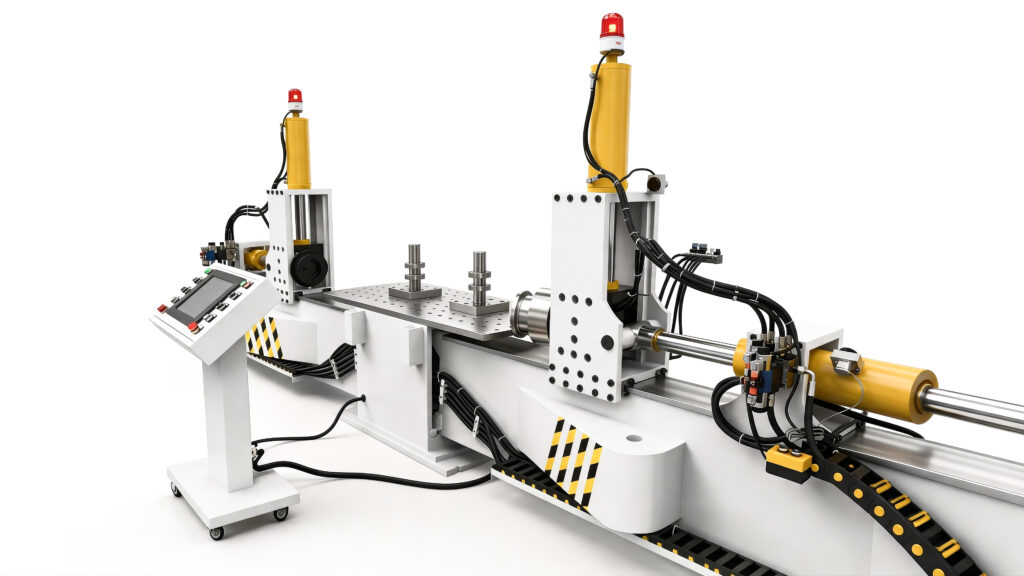
Core Calculation Factors:
To determine the required Machine Tonnage, our calculator considers:
- Material Yield Strength ($\sigma_s$): The stress level where plastic deformation begins (crucial for Aluminum and Titanium alloys).
- Cross-Sectional Area ($A$): The total area of the profile being formed.
- Safety Factor: Accounting for material batch variations and complex geometry requirements.
Pro Tip: For high-precision aerospace and automotive structural parts, we recommend a machine tonnage that offers a 20-30% buffer above the theoretical peak bending force to ensure consistent performance under variable loading.
“Precision Starts with the Right Tonnage”
Don’t guess your machine requirements. Use our Bending Force & Machine Tonnage Calculator to define your technical specifications with confidence.